
YOSEMITE NATIONAL PARK, CA – Spring may still be on the calendar’s horizon, but according to Laura and Rob Pilewski – Yosemite’s Tuolumne Meadows winter rangers, Spring in the high country of Yosemite National Park is already starting to make itself known.
This past week brought warm, dry weather to the central Sierra, kicking off what looks like an early start to the spring melt—possibly as much as a month ahead of schedule.
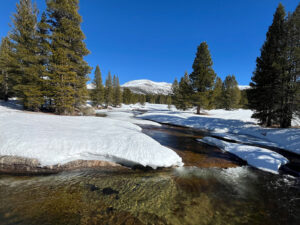
As of March 9, snow depth in Tuolumne Meadows measured 36 inches, with no new snowfall. Temperatures
climbed to a balmy 58°F on March 8, while overnight lows dipped to 18°F earlier in the week. That kind of swing is enough to get things moving—and it has. Creeks and rivers are beginning to open up, and the snowpack is entering a phase where it’s becoming wet and heavy throughout, a key step toward full spring runoff.
Great Skiing—If You Time It Right
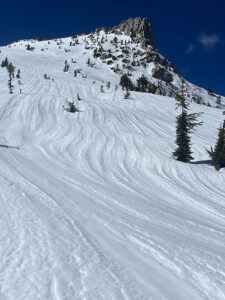
For those still hoping to squeeze in some winter adventure, there’s good news: ski touring conditions are holding strong.
The daily melt-freeze cycle has created a firm, supportive surface that makes for smooth travel, especially in the mornings. In some spots, skiers are even finding patches of that coveted “corn snow”—soft, carvable snow that shows up when conditions line up just right.
That said, it’s not perfect out there. A big February storm followed by rain and warm temps left behind “runnels”—grooved channels in the snow that can make skiing a bit more challenging, especially on the downhill. And at higher elevations, colder temps and wind have kept conditions more locked up, particularly on shaded slopes.
Avalanche Risk Becomes a Timing Game
As the snowpack shifts into spring mode, avalanche danger doesn’t disappear—it just changes.
Instead of storm-driven instability, the biggest factor now is the sun. As the day warms up, the snow softens, and that can increase the risk of slides during certain windows of time.
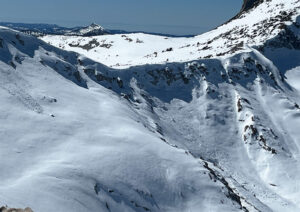
Yosemite’s smooth granite terrain adds another layer of concern, acting like a natural slip-and-slide for snow.
Cornices—those overhanging lips of snow along ridgelines—can also weaken and break off without much warning.
Before heading out, it’s a good idea to check in with the Eastern Sierra Avalanche Center or the Bridgeport Avalanche Center for the latest conditions.
Signs of Life in the High Country
It’s not just the snow that’s changing. Wildlife is starting to respond to the shifting season as well.
Rangers recently heard a Cassin’s finch in Tuolumne Meadows for the first time this year—a small but telling sign that spring migration is getting underway. Birds rely on longer daylight hours, temperature changes, and food availability to cue their seasonal movements, and it seems some species are already on the move.
A Cozy Stop Along the Way
For anyone heading into the backcountry, there’s also a bit of good news on the comfort front: the Tuolumne Meadows Ski Hut is open again after renovations.
The small, rustic cabin offers 10 bunks and firewood on a first-come, first-served basis. It’s not fancy, and you shouldn’t expect electricity or cell service—but on a cold night, it can feel like a luxury.
Be Ready for Changing Conditions
Even with spring knocking early, winter isn’t done just yet. Conditions in the high country can change quickly, especially this time of year.
With more snow surveys still ahead, rangers say it’s too soon to call the season—but it’s clear things are moving fast. Anyone heading out should plan carefully, pay attention to the time of day, and be ready for a mix of winter and spring conditions.
As always, Laura and Rob Pilewski – Yosemite’s Tuolumne Meadows winter rangers have advice that’s simple: come prepared, travel smart, and enjoy the experience.
Because right now, Yosemite’s high country is in that in-between moment—where winter hasn’t quite let go, and spring is already starting to take over.
Also Read:
The Ultimate Guide to Planning a Visit to Yosemite in March